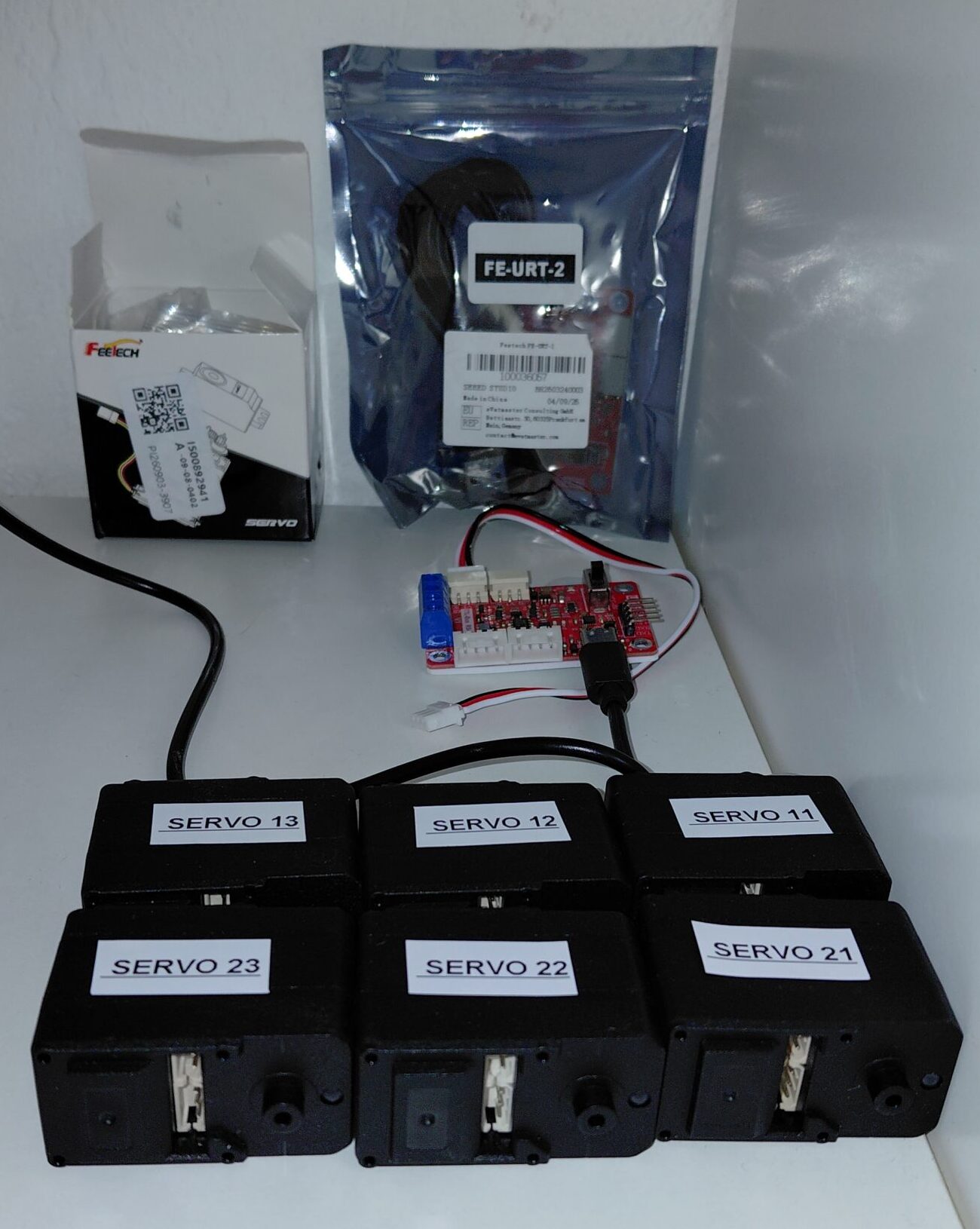
The other day, we received the first electronic parts.
6 x Feetech STS3215-C018 High Precision Servos (for 2 x Hip, Knee and Ancle)
2 x Feetech FE-URT-2 (Servo controller)
1 x PSU 12V, 30A
All six servos tested, and ID´ed:
#11 Left ancle
#12 Left knee
#13 Left hip
#21 Right ancle
#22 Right knee
#23 Right hip
Now it is time to produce the fist print fiels, for testing the servos actually fits inside the joints as currently drawn up.
Excited to get the first parts printed and tested.
We still need a lot more electronics (1 step at a time):
1 × FEETECH FE-URT-2 — USB interface for configuring, testing and diagnosing the smart servos
1 × Raspberry Pi 5, 8 GB — main computer; AI, speech, vision, networking and high-level decision making
1 × ESP32-S3-DevKitC-1-N8R8 — real-time movement, sensor and low-level robot controller
1 × BNO085 9-DOF IMU — orientation, movement and balance sensing
6 × Interlink FSR 402 pressure sensors — 3 per foot for ground contact and weight-distribution feedback
2 × ADS1115 16-bit ADC boards — high-resolution acquisition of the six foot-pressure sensors
1 × combined USB camera + microphone module — vision and voice input through USB, keeping both functions directly accessible to the Raspberry Pi without consuming/depending on the ESP32’s limited interfaces
1 × MAX98357A I²S audio amplifier — digital audio output
1 × speaker — Chilly’s voice
Short explanation:
Raspberry Pi 5 = brain → ESP32-S3 = nervous system / real-time control → BNO085 + feet = senses → STS3215 servos = muscles → USB camera/microphone = eyes & ears → speaker = voice.